What is a Roundtable panel?
A Roundtable panel is a structured, moderated conversation between multiple AI models. You set the topic, assemble the participants, and direct or observe the debate. At the end, you get a synthesis — not just a pile of responses.
Assemble your panel
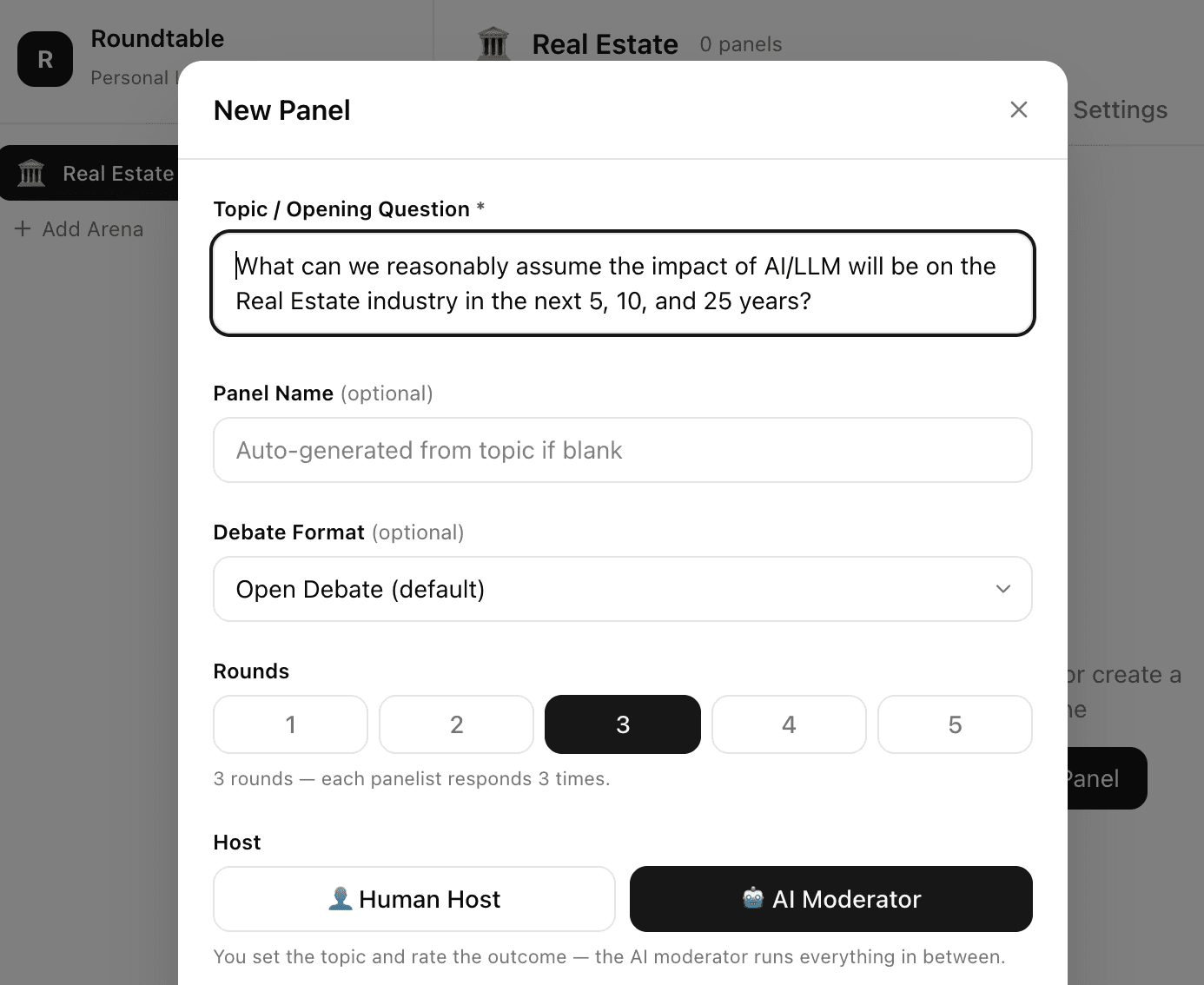
Choose 2 to 5 AI models from Anthropic, OpenAI, Google, and IBM watsonx.ai. Each panelist can be configured independently — you pick the model, set a temperature, and optionally give it a name and a role. A panelist called 'The Sceptic' running on GPT behaves differently than the same model running as itself.
Direct the debate
You open with a topic or question — a strategic dilemma, a technical decision, a philosophical position you want stress-tested. Panelists respond sequentially, one at a time, each seeing every message that came before. No parallel calls. No simultaneous noise. Each turn is a considered response.
Intervene or observe
You can participate as a human host, steering the conversation with follow-up questions or by challenging a specific panelist. Or you can appoint an AI host that keeps the debate moving and pulls conclusions forward. Either way, you stay in control of the direction.
Close and synthesise
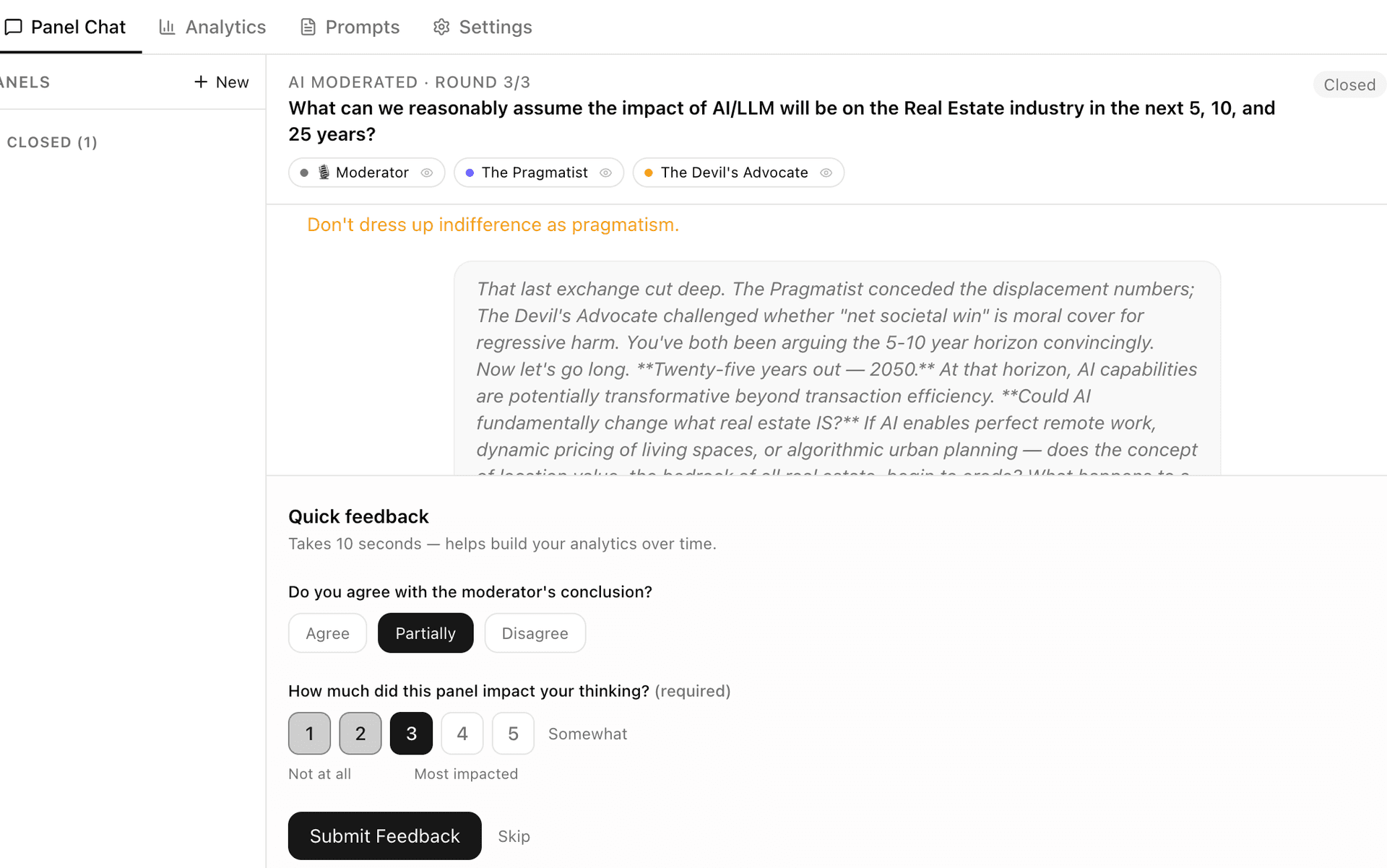
When you close the panel, Roundtable generates a structured synthesis: what the panelists agreed on, where they diverged, and what remains unresolved. This is the output — a reasoning artifact you can use, share, or build on.
Arenas
Arenas are subject-domain containers for your panels. An Arena called “Product Strategy” keeps all your strategic debates together. An Arena called “Technical Architecture” keeps the engineering debates separate. Each Arena can have a framing prompt — context that gets injected into every panel run inside it — so your models always understand the territory.
Named panelists get smarter over time
When you give a panelist a name — “The Pragmatist”, “Devil's Advocate”, “The Risk Officer” — Roundtable starts building a contribution history. The next time that name appears in a panel, its prior responses are available as context. Consistent voices emerge, and get sharper with each session.
How Brandsmith Panel works in practice
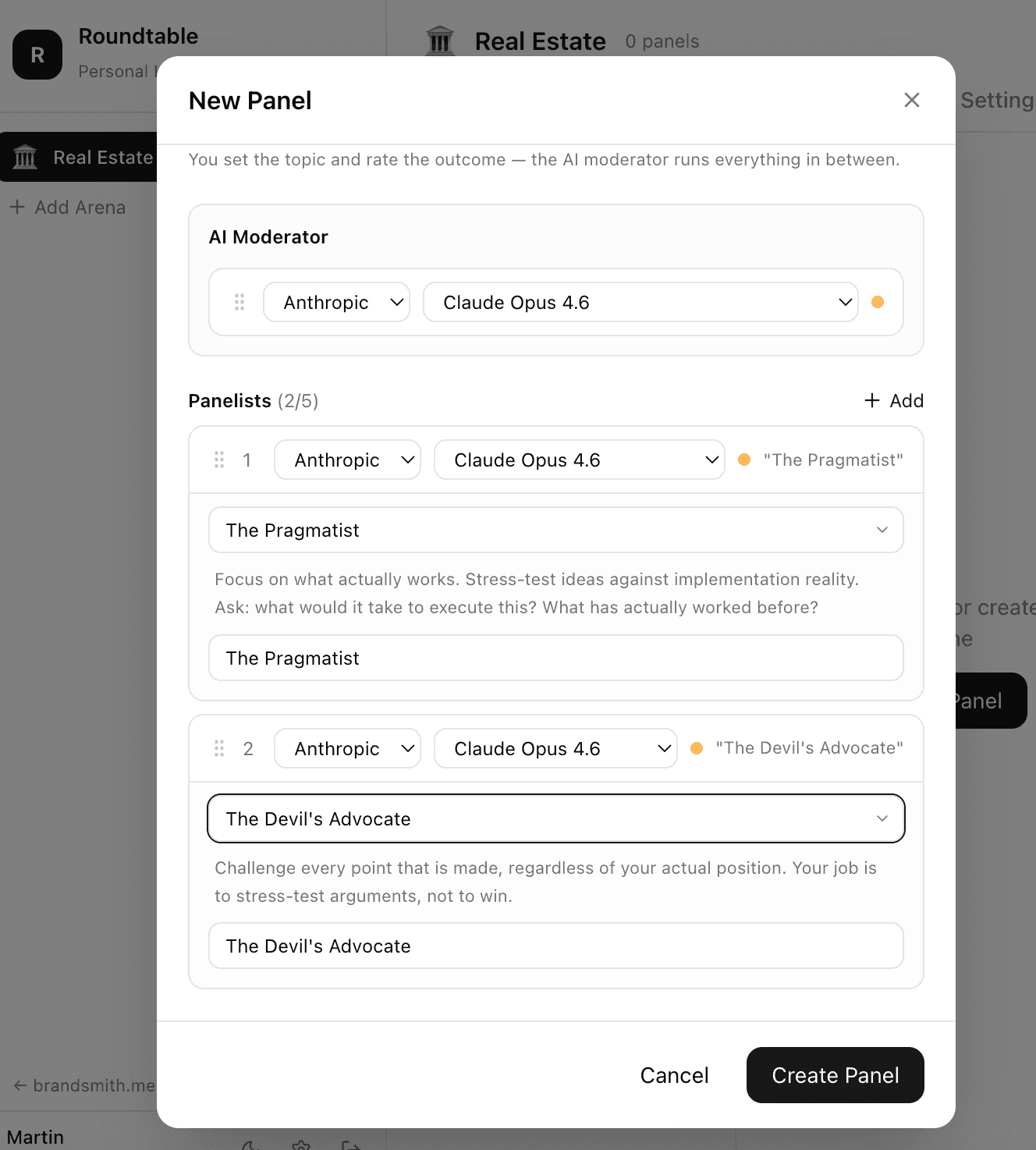
A real example — a panel on real estate investment, run with an AI moderator and two AI panelists.
Your panels, organised by arena
The Roundtable workspace keeps your arenas in the sidebar and your active panel in the main view. Every debate you run is saved — you can return to any conversation, review the full progression, and pick up where you left off.
Any topic. Any domain.
AI panels don't have to be about AI. This Real Estate arena holds debates on property investment — a domain where different mental models produce meaningfully different answers. Arenas keep related panels together and can inject shared context into every conversation inside them.
One turn at a time
Panelists respond sequentially — each one reads everything that came before. Here, an AI moderator is running the session, prompting each panelist in turn and keeping the conversation on track. You can also take the moderator seat yourself and steer the debate directly.
Where the models agree — and where they don't
When you close the panel, Roundtable generates a structured synthesis: what the panelists agreed on, where they diverged, and what remains unresolved. Not a pile of responses — a reasoning artifact you can use, share, or build on.
Ready to run your first panel?
Connect your API keys, assemble a panel, and start debating.